Ship repair in Türkiye: docks, capacities and where to find them
A guide to Türkiye's ship repair yards: the main clusters, the largest floating and graving docks, and what owners should check before booking a dock.
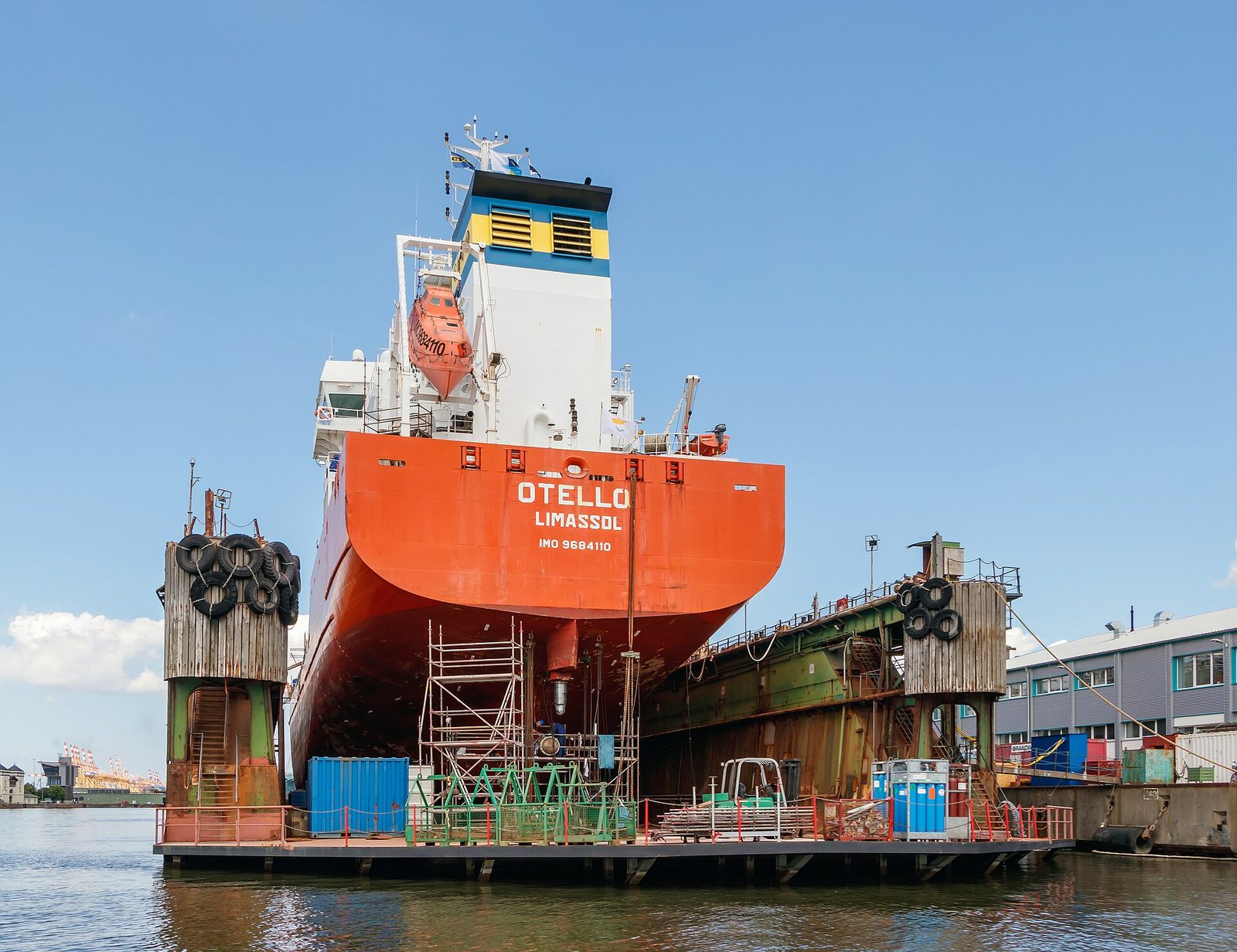

Ship repair is one of the oldest and steadiest businesses of the Turkish yards. Most of it happens in two places on the Sea of Marmara: the Tuzla shipyard zone on the Asian side of Istanbul and Altınova in Yalova province, across the Gulf of İzmit. Both sit on the route that ships use between the Black Sea and the Mediterranean through the Turkish Straits, so a vessel can often be docked without a long deviation.
How big is the sector?
The Turkish Shipbuilders’ Association (GİSBİR) gave the country’s repair and maintenance capacity as “15 million dwt” in 2014, alongside 4 million dwt of newbuilding capacity. A later GİSBİR presentation counts the country’s floating docks at 11 in 2003, 15 in 2008 and 32 in 2019, with the largest “up to 350 m x 85 m”.
Altınova shows how fast the Yalova cluster grew. Figures collected on the Altınova Wikipedia page show completed maintenance and repair jobs rising from 110 in 2008 to 885 in 2019.
The largest docks
The table lists docks of 200 m or more in the Turkish Yards directory, with the dimensions each yard publishes on its own website. Lifting capacity is shown only where the yard gives it.
| Yard | Region | Dock | Length × breadth | Lifting capacity |
|---|---|---|---|---|
| Beşiktaş Shipyard | Yalova | Floating Dock 1 | 382 × 58 m | 72,000 t |
| İÇDAŞ Shipyard | Biga, Çanakkale | Dry dock | 370 × 70 m | – |
| TK Tuzla Shipyard | Tuzla | Floating dock | 350 × 65 m | 109,000 t |
| Beşiktaş Shipyard | Yalova | Floating dock | 345 × 70 m | – |
| Sedef Shipyard | Tuzla | Dry dock | 310 × 50 m | – |
| Tersan Shipyard | Yalova | Dock 3 (floating) | 310 × 51 m | 50,000 t |
| Gürdesan Shipyard | Yalova | Floating dock | 301 × 51.5 m | 50,000 t |
| Gemak TGE Shipyard | Tuzla | Graving dock | 300 × 53 m | – |
| Park Shipyard | Yalova | Floating dock | 285 × 46.4 m | 52,500 t |
| Seltaş Shipyard | Yalova | Floating dock | 260 × 45 m | – |
| Hat-San Shipyard | Yalova | Dock 2 (floating) | 250 × 38 m | – |
| Gemak Shipyard | Tuzla | Floating dock | 245 × 37 m | – |
| Beşiktaş Shipyard | Yalova | Graving dock | 235 × 40 m | 28,000 t |
| Desan Shipyard | Tuzla | Dock 1 (floating) | 234 × 51 m | 49,000 t |
| Art Shipyard | Tuzla | ART-1 (floating) | 230 × 38.2 m | – |
| Hat-San Shipyard | Yalova | Dock 1 (floating) | 230 × 38 m | – |
| Desan Shipyard | Tuzla | Dock 4 (floating) | 230 × 38 m | 20,000 t |
Below 200 m there is a long list of smaller floating docks and slipways for coasters, tugs, ferries, fishing vessels and offshore craft, in Tuzla, Yalova, the Black Sea ports and Northern Cyprus. Each yard page in the directory lists its docks and the page the figures come from.
Beyond Marmara
Repair capacity is not only in Istanbul and Yalova. Shipyard Famagusta in Northern Cyprus has a 160 m floating dock, and Akdeniz Shipyard in the Yumurtalık Free Zone near Ceyhan works on the eastern Mediterranean. Several Tuzla groups also have a second site: Tersan runs a repair branch in Tuzla next to its Yalova newbuilding yard, and Gemak has yards in both Tuzla and Altınova.
What to check before booking
- Dock size and lift: compare your ship’s length, breadth and lightship weight with the dock figures, and ask the yard for the current docking plan.
- Class and approvals: most large repair yards publish their class society approvals and ISO certificates; the directory lists those the yards state.
- Scope: some yards focus on routine dry-docking, others take conversions, scrubber or ballast water system retrofits, and lengthening jobs.
- Timing: demand for docks in the Marmara cluster changes through the year, so book early for planned dockings.
Figures in this guide come from the yards’ own websites and the sources listed below. Docks change: yards add new floating docks and sell old ones, so always confirm with the yard.